Did you like this article?
Share with your friends
Join our newsletter
For small businesses, B Corp certification can feel daunting and costly. As a recently certified B Corp, we share our learnings and encouragement for other small enterprises considering the first steps towards certification.
There are plenty of sustainability programmes and certifications out there. Some, like EcoVadis, assess ESG performance across supply chains, while others focus on setting credible carbon reduction targets. Then there are industry-specific schemes such as Green Key and EarthCheck, which are commonly used to benchmark environmental performance within travel and hospitality.
B Corp stood out to us because it assesses the whole business — from governance and employees to community and environmental impact. It signals that a company is taking meaningful action across the board — putting people, planet and purpose before profit.
AliKats is an independent chalet company based in the French Alps, offering year-round mountain holidays in Morzine. In the years prior to starting the B Corp process, we’d already taken important steps: joining sustainability programmes within the tourism sector, creating our own climate action plan covering waste and carbon monitoring, and helping to launch Montagne Verte — a non-profit focused on creating solutions for a more sustainable future in our Alpine region and beyond. But we wanted a framework that would push us further and help us understand where we truly stood.
Because B Corp is non-industry specific, it creates a global, cross-sector benchmark. To us, that felt like a reliable way to define what “good” looks like, identify gaps and move forward with clarity. It felt like the natural next step in our sustainability journey — but it’s become much more than a certificate, and we’re eager to share our learnings and encourage other small businesses on the same path.
Many of the best-known B Corps are big brands like Patagonia, Finisterre and Ben & Jerry’s, which can make smaller businesses question whether they have the resources, policies or budgets to succeed. Even the word “corporation” in the B Corp title can sound intimidating to a small independent business.
AliKats was founded by a husband-and-wife team. We employ fewer than 50 people and don’t have a dedicated sustainability department — or even one person solely responsible for environmental policy. Like many small businesses, we were already doing a lot of things right, but often informally rather than through written policies or structured systems.
One of the biggest challenges with B Corp certification is that you have to prove your practices. At the start, we weren’t entirely sure how we would do that. In some cases, we had to create documentation from scratch. Whilst this felt daunting, it proved incredibly valuable — not just for the certification process itself, but for formalising and strengthening the sustainability practices that mattered most to us. For example tracking the proportion of our purchases that are made through local suppliers, helped us see opportunities and set targets for increasing that number.
Working through the assessment questions highlighted some interesting truths. In some areas, we realised we were doing more than we realised; in others, the process exposed gaps and areas where we needed to improve. All in all it gave us new perspectives and systems to work with. One advantage of being a small business is the ability to act quickly. We were able to take immediate steps to start documenting our actions more formally and addressing gaps as they emerged. In many ways, being small turned out to be a strength.
The B Corp community is incredibly supportive, and you don’t need to be certified to benefit from it. We found it hugely helpful to connect with other businesses already on the B Corp journey, as it gave us a realistic understanding of what to expect from the process.
Most B Corps are very willing to answer questions, share advice and offer encouragement along the way. It also helped that the assessment platform itself was clear and easy to navigate, and every B Corp representative we dealt with was approachable, supportive and genuinely encouraging.
We’re not experts on B Corp certification — we’re simply one small company that has been through the process. We learned as we went, but having the right structure in place made a huge difference.
For us, that meant having a two-person team leading the process, with one person responsible for driving it forward and keeping us on track with timelines and deadlines. Just as importantly, we made sure the wider team understood why the certification mattered, what it represented and what would be involved.
That early buy-in was invaluable. When we needed information, documents or support, our often time-pressured team understood the bigger picture and did what they could to help quickly and efficiently.
As you make your way through the B Impact Assessment, it is vital to keep records of supporting documentation as you will need to submit it as evidence at a later stage. For us, sticking with familiar tools like Google Drive shared folders, spreadsheets and written policies worked well enough. As you gather data, it’s imperative that you track your methodology as you will be required to show your work at later points in the certification process. It’s also helpful to maintain a record of who provided the information and where it came from, so you can follow up if needed.

There will be moments during the process when you find yourself looking up terminology, defining new methodologies or buried deep in spreadsheets and data. At times, it can feel heavy and overwhelming.
Submitting your B Impact Assessment is a real milestone, but it’s not the finish line. Once submitted, your application is reviewed and verified, often leading to another round of detailed questions and requests for evidence. Progress can sometimes feel slow, especially when you’re balancing the process alongside the day-to-day demands of running a business.
The B Corp website suggests allowing 6–8 months for the entire process. In reality, from starting our assessment to receiving confirmation of certification it took us almost exactly one year.
Our advice is to stay patient, be thorough and keep going. Do bite sized chunks by setting yourself a section to do over a period of time. Ask questions when you need to, lean on the community around you and try not to lose sight of why you started the journey in the first place.
Achieving B Corp certification is anything but easy, but recognising that certification isn’t the end goal is key. The real value lies in the framework it provides to continually and measurably improve a business’s impact.
We will need to recertify in three years from our initial certification, and since we certified, B Corp has introduced new, higher standards — an important evolution to reflect global challenges and drive meaningful impact. Over the coming months, we’ll need to ensure we meet these new requirements.
Are we daunted? Yes, a little. But that’s also what motivates us. If it were easy, it wouldn’t be worth doing. It’s an ongoing journey, and one we’re fully committed to.
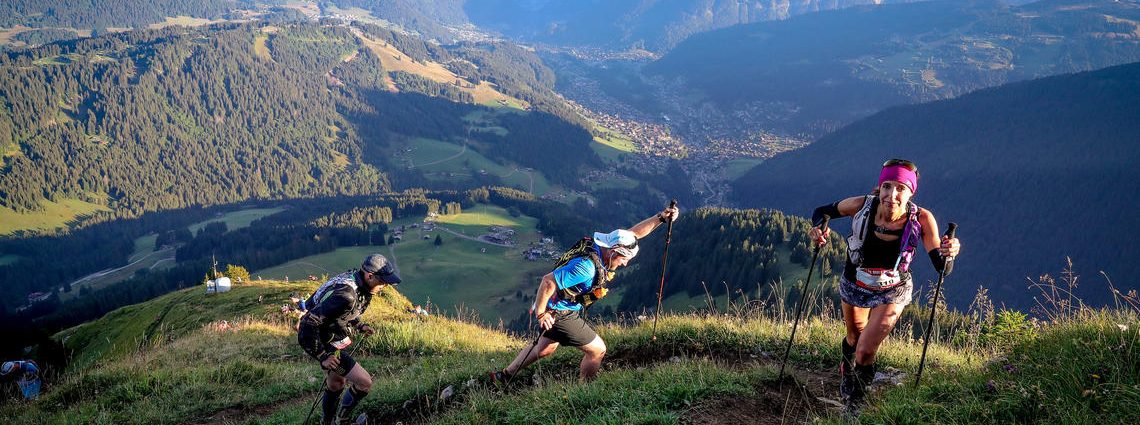
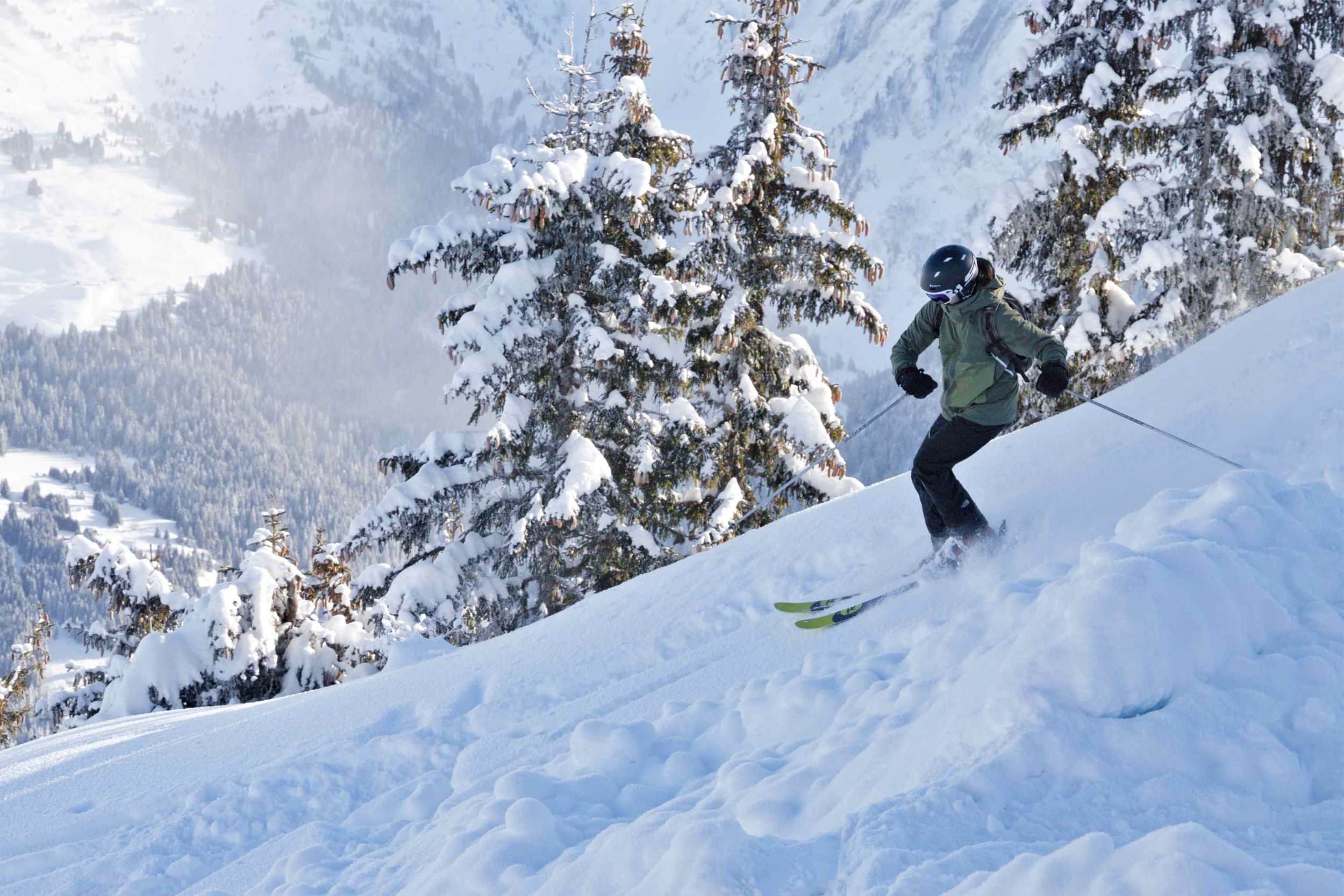
Main image: Trail des Hauts Forts Morzine, image 2: @DomaineSkiableMorzine; image 3: Morzine Avoriaz Tourist Office, image4: canyoning @samingles
Summer has a habit of turning even the tidiest homes upside down. As children swap sandals for school shoes and routines return, September is the perfect time to refresh your home. A seasonal reset now will create a calmer, more organised space that’s ready for the cosy months ahead.
Continue reading...Rising energy costs, stricter regulations, and climate awareness are driving sustainable chalet design in the Alps. We spoke to Steve Downs, founder of ECSUS Design, to explore how to build an eco ski chalet that’s energy-efficient and built for the future.
Continue reading...Adopting a sustainable approach to chalet management protects the mountains you love while supporting the long-term success of your property.
Continue reading...If you’ve booked an AliKats holiday over the last year, you may remember a carbon neutrality transport contribution being added to the cost of your holiday. Here we explain why we introduced that contribution, what it amounted to and what it means for the planet. Minimising our carbon footprint is…
Continue reading...